
Dust control is a crucial part of managing land disturbance, whether part of government, council, or corporate works.
At Solve Civil, we’re not just a dust control product applier or equipment supplier. We’ll be your licensed head contractor, delivering dust control solutions integrated into your broader land management plan.
On this page, we’ll break down what dust control solutions are, where and how they’re applied, and their regulatory compliance requirements.
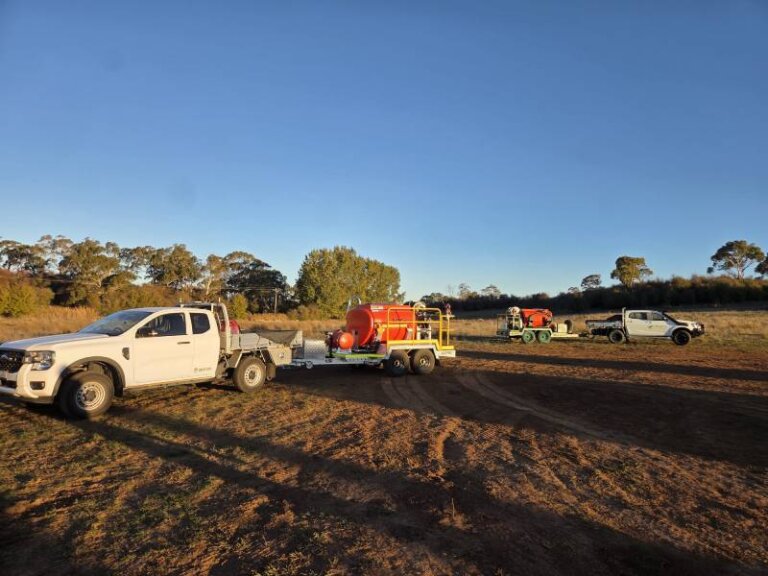
Dust control solutions are the various methods and treatments used to suppress dust particles that occur due to land disturbance, earthworks, vehicle traffic, or wind erosion on civil and infrastructure sites.
The main types of dust control are:
These land management dust control solutions differ from indoor and industrial dust extraction. Land management dust extraction is at a larger scale and uses the above-mentioned methods for open-site, civil, and land management. Indoor and industrial dust control, meanwhile, uses filtration and ventilation to extract hazardous particles.
At Solve Civil, our dust control involves three main methods: chemical suppressants and surface binders, vegetative cover, and water suppressants.
Dust suppression with chemical suppressants and surface binders is applied directly to exposed soils. Made up of polymer-based or bitumen-emulsion binders, these suppressants bind dust particles to the soil surface and prevent dust from lifting off due to wind or traffic.
Chemical suppressants and surface binders have advantages over water carts, as they are longer-lasting, require fewer applications to work, and reduce total water usage on a site.
By establishing vegetation at your site, you’ll have one of the most durable long-term forms of dust control available to you. The root systems of vegetation bind soil together, helping it stay in place, while surface plants cover the ground and eliminate potential lift-off points.
At Solve Civil, we can establish vegetation at your site through our hydroseeding services, as well as our hydromulching services. They’re both quick to implement and offer a solution for dust control on rehabilitation sites.
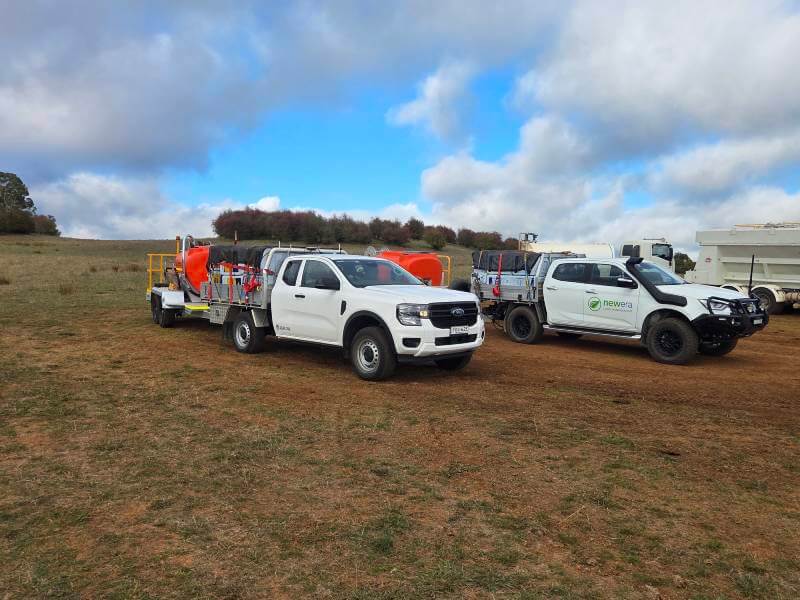
Water cart and spray suppression are effective short-term or temporary solutions for dust suppression. This can be applied to active construction projects, haul roads, and stockpile areas.
While effective, water-based dust suppression does have some drawbacks. It requires frequent re-application, especially in hot and windy areas of Sydney, and should not be used as a standalone, long-term solution for dust control.

Solve Civil applies its dust control solutions to a variety of infrastructure sites across Sydney, including:
As your head contractor, Solve Civil can manage every aspect of rehabilitation and vegetation regrowth at your site. From dust control and soil stabilisation to hydromulching services and post-rehab monitoring, we’ve got you covered.
At Solve Civil, we’re completely across all the regulatory compliance requirements for dust control in NSW. These include:
When you hire Solve Civil, you won’t have to become an expert on reporting. We’ll take care of it all for you. Whether it’s compliance documentation, site monitoring, or regulatory requirements for dust control, we’ll manage the paperwork for you.

Have you ever wanted to know what the dust control process looks like? Here’s how we implement ours:
1. Site assessment
Visit the site, assess the type and scale of dust generation (traffic load, soil type, wind exposure, proximity to waterways or residential areas), and identify any EPA or SafeWork compliance requirements specific to the project
2. Solution selection
Recommend the right method or combination of methods based on site conditions: chemical binder, water suppression, vegetative cover, or a staged approach across the project lifecycle
3. Application
Deploy the selected treatment using appropriate equipment (hydroseeder trucks for surface binder application, water carts for active zones, etc.)
5. Monitoring and follow-up
Check suppression effectiveness over time, reapply as needed, and advise on when vegetative cover has sufficiently established to take over from chemical treatment
4. Integration with broader scope
Where the project includes erosion control, hydroseeding, or soil stabilisation, coordinate dust control sequencing with those works so there's no gap in surface protection between earthworks and vegetation establishment
For years, Solve Civil has delivered polished car park products that have been tailored to our customers’ needs. By operating as a head contractor, we cut down on the personal management and delegation work that clients typically have to deal with during construction; thus, saving you time, money and effort.
We're your one point of contact for yoru full scope of dust control and site rehabilitation needs.
We'll combine dust control, soil stabilisation, and revegetation all into one package.
Our team delivers services with full regulatory compliance, providing all essential documentation.
Trusted by councils, educational organisations and more



















Outside hydromulching, we offer multiple large-scale civil construction services that can easily be integrated with your land management needs. Check out some of our options below:
Dust control solutions on civil sites are used to suppress dust particles that can be caused by earthworks. They’re also used to prevent erosion and help during the revegetation establishment phase.
The NSW EPA recommends multiple measures for suppressing dust, including:
The most effective dust suppression method for infrastructure sites is a combination of water applications with chemical binders.
By controlling dust, you lessen the impact that wind and other disturbances can have on soil, reducing erosion. Additionally, dust suppression helps with revegetation by protecting soil as plants take root, helping them establish properly.
Yes, we do. At Solve Civil, we work on a variety of different government and council dust control projects for clients. Contact our team and we’ll arrange a dust solution for you.
Discover how Solve Civil can transform your next project.
Every site has different dust control needs, and Solve Civil is ready to meet them. We’ll assess the scope of your site and give you a tailored quote, factoring in site conditions, application methods, and your project timeline requirements.
Contact Solve Civil today, and find out about our range of innovative dust control measures.
Got questions or comments? Tell us about your next project!