
What Is Civil Construction?
In essence, the civil construction industry involves the design, delivery, and maintenance of connective infrastructure projects used by the broader community, such as:
- roads
- bridges
- stormwater systems
- earthworks
- retaining structures
- land management
Such civil construction jobs are often large-scale infrastructure projects and fall under tight regulations. More often than not, they’re funded by the public and need full coordination and support with local infrastructure bodies and environmental authorities. Civil construction work doesn’t involve buildings, but may require some level of integration with them to improve public infrastructure.
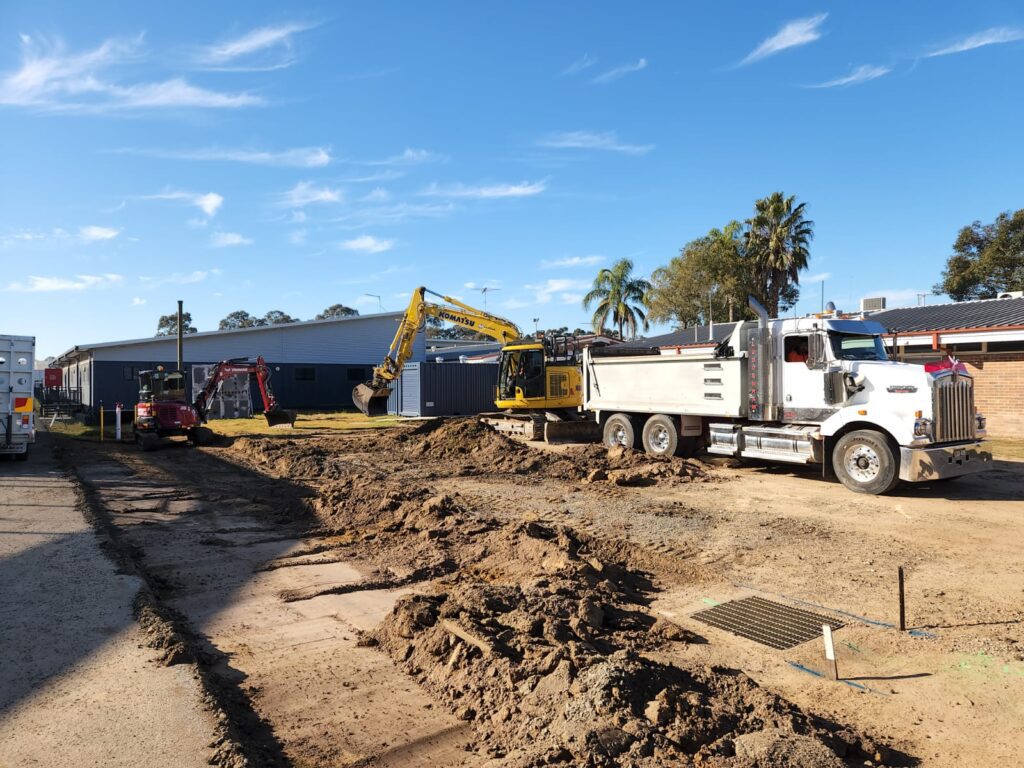
What Is Standard (Building) Construction?
Standard construction (also known as building or general construction) involves creating physical structures designed for residential (houses, apartments), business (offices, retail), industrial (warehouses, factories), or institutional use (schools, hospitals, etc).
Standard builds are generally governed by the National Construction Code (NCC), as well as local planning controls. In most cases, standard building projects are initiated by private individuals, developers, or businesses.
Civil Construction vs Standard Construction: Key Differences
While both civil and standard construction projects involve some degree of construction, they can vary widely in their scope, regulations, clients, and delivery approach. In this table, we’ll break down some of the key differences between the two.
| Civil construction | Standard construction | |
| What’s being built? | Roads, bridges, drains, earthworks, retaining structures, utilities | Homes, offices, warehouses, retail spaces |
| Who commissions it? | Government bodies (federal, state, and local councils), infrastructure authorities, and corporate asset owners managing large-scale assets | Private individuals, property developers, commercial businesses |
| How is it funded? | Publicly funded through government budgets, grants, or infrastructure programs | Privately funded by the client, developer, or business |
| What regulatory requirements? | Subject to infrastructure-specific regulations, environmental considerations, WHS obligations, and safety standards for public-facing sites, and coordination with councils and utility providers | Governed by the NCC, local planning controls, and building approval processes |
| What skills and equipment? | Geotechnical knowledge, earthmoving and heavy plant, erosion control, drainage design, and coordination across multiple authorities | Structural construction, carpentry, plumbing, electrical trades, and interior fitout coordination |
When Do You Need a Civil Contractor vs a Builder?
When deciding between a civil contractor and a builder, the choice comes down to exactly what you’re building and where it sits in your overall project timeline.
- Civil contractor: If you’re building/upgrading government or site infrastructure (such as roads), managing land rehabilitation and erosion control on a large site, or preparing a site before a building contractor arrives, then you’ll need a civil contractor. They’ll take care of these and other large-scale public works.
- Building contractor: Required for constructing, renovating, or fitting out a structure, such as a house, office building, warehouse, or shopping centre.
Occasionally, you’ll need to use both civil and building contractors. This can be when your project involves both infrastructure prep and building construction.
Examples of this kind of scenario include new commercial developments that require site earthworks and drainage before construction begins.
Many large standard/building projects will require civil works during their initial phase. By taking into account these civil works before building commences, you can make considerable savings on time, cost, and stress.
Frequently Asked Questions
What is the main difference between civil and standard construction?
The difference between civil and standard construction ultimately comes down to what is being built. Civil construction involves connective works used by the wider community, including new roads, bridges, drainage, earthworks, and utilities. By contrast, standard construction encompasses buildings, such as homes, offices, commercial and industrial buildings.
In short, the civil construction sector involves the ‘behind-the-scenes’ work, whereas standard builds involve structures that people occupy for habitation and work.
What are some examples of civil construction in Australia?
Commissioned by government bodies or corporate asset owners and managed by civil contractors, civil works in Australia include critical infrastructure such as:
- roads and highways
- railways
- stormwater drains
- bridge construction
- retaining walls
- site earthworks
- soil stabilisation
- land rehabilitation
While these are often standalone, they can sometimes be integrated with a standard construction project, especially during preliminary stages.
Is civil construction the same as civil engineering?
Not quite. Civil engineering encompasses the design and planning of infrastructure, including drawings, calculations, and the like. Civil construction focuses on the actual delivery of that design as a built object. Both civil contractors and civil engineers work together, but their roles are different.
Who funds civil construction projects?
Typically, civil construction projects are public infrastructure programs funded by the government, whether it be at a federal, state, or local council level. In some instances, however, civil works are funded privately by corporate asset owners who are managing large-scale mining, industrial, or development projects.
Can one company deliver both civil and standard construction?
While some contractors and companies can deliver both civil and standard construction projects, they have different areas of expertise. A civil project requires specific knowledge surrounding geotechnical conditions, heavy plant operation, regulatory compliance, and essential infrastructure delivery.
Before contracting an operator for civil works, it’s always best to confirm their civil credentials to ensure they can carry out the work you require.
Need a Civil Contractor in NSW? Talk to Solve Civil
When choosing between civil construction providers, you’ll need one who has experience with large-scale works and a hands-on team. Thankfully, Solve Civil is a family-owned business with years of project management experience on government and corporate projects, including infrastructure renewal. We’ll be your head contractor from consultation to project handover, and can integrate with other construction works you may require. Contact Solve Civil today, and find out how we can partner with you.