

What Is Bitumen?
Bitumen is a naturally occurring material that acts as a binding agent in construction projects. It’s a thick, viscous liquid made from distilling crude oil.
Natural bitumen is a petroleum-based, sticky substance known for its waterproofing properties. It is used as an ingredient or sealant for surface materials, and not a surface material in and of itself.
Bitumen is used in two main ways in construction: as a liquid binder mix in asphalt, and as a spray seal. Liquid bitumen is sprayed directly onto a prepared surface and then covered with loose aggregates. This is an especially common use on rural and suburban NSW roads.
Sometimes, bitumen can be confused with tar and tarmac, although they are two different products. Tar is an older product, whereas modern road construction projects use bitumen in its place.
What Is Asphalt?
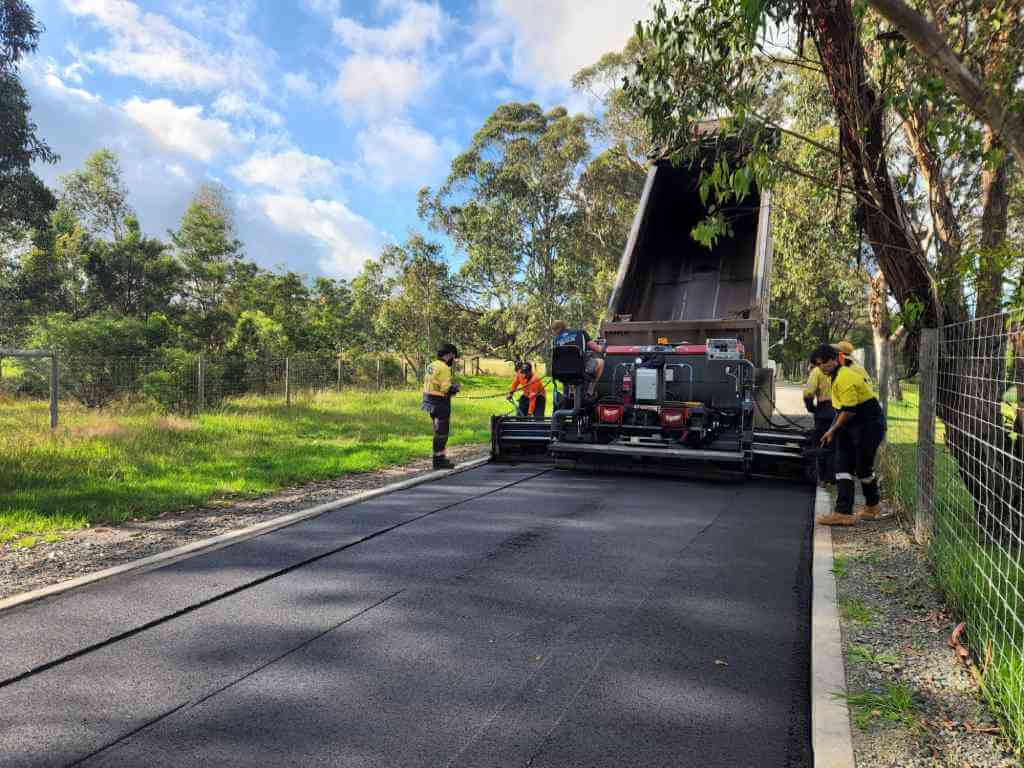
Asphalt is produced in a plant by heating and mixing bitumen, crushed aggregate, sand, and other components. This mixture creates a solid and durable paving material, which is then taken to a site and laid on a hot surface using specialised paving equipment. In the UK, asphalt is often referred to as bitumen, and bitumen is also referred to by some as asphalt cement, which can cause some confusion between the two materials.
Hot mix asphalt provides a durable surface and is the standard type of asphalt used for building roads, car parks, and commercial paving in Sydney. If a project manager in Sydney asks for bitumen, they almost certainly mean they require asphalt.
Asphalt vs bitumen: key differences at a glance
There are some key differences between what bitumen and asphalt offer to project managers. In the table below, we’ll compare the two substances, so you can decide which is best for your construction project.
| Asphalt | Bitumen | |
| What is it? | Paving material comprised of bitumen, crushed aggregate, and sand. | Thick, viscous liquid derived from crude oil, and used as a binding agent. |
| How is it applied | Applied hot to a prepared surface using specialised paving equipment. | Mixed in with other materials or sprayed as a sealant. |
| Surface finish | Smooth, dense, and tightly-textured. | Textured, coarse, and skid-resistant. |
| Layer thickness | 25-40 mm | 10-20 mm |
| Lifespan | 20 + years | 5-10 years |
| Traffic load | Suitable for high-volume traffic | Low-volume traffic only |
| Upfront cost | $30 to $100 per square metre, depending on the complexity of the job. | $25 to $95 per square metre, depending on the complexity of the application. |
| Best used for | Car parks, commercial paving, urban roads | Rural roads, low-traffic areas |
Which one does your Sydney project actually need?
Choosing either bitumen or asphalt for your project will largely be driven by the type of traffic expected upon your surface and the location of your job site.
Pick asphalt for various applications where strength and durability are paramount, including:
- car parks
- hardstands
- commercial driveways
- access roads
- resurfacing roads
- sites with regular heavy vehicle traffic
- urban and suburban locations in Sydney
Meanwhile, you may want to buy bitumen if your project consists of:
- low-traffic rural roads and parking lots
- large area semi-rural access tracks
- light traffic loads
- situations where upfront cost is the primary driver
For most commercial, government, and civil projects, you’ll want an asphalt contractor in Sydney. This is because Sydney’s hot climate and heavy urban vehicle loads require a longer-lasting surface, which asphalt provides in a cost-effective package. Spray seal bitumen roads, on the other hand, can wear out more quickly in similar heavy load conditions.
Frequently Asked Questions
Is bitumen or asphalt smoother?
In general, asphalt is the clear winner when it comes to smoothness. Asphalt’s mix of bitumen, sand, and aggregate leaves your surface gap-free, whereas bitumen can be much rougher and heavier with aggregates. Asphalt’s toughness also means less maintenance is required compared with bitumen-sealed surfaces.
Is asphalt the same as bitumen?
No, asphalt and bitumen are not the same thing. Asphalt is a composite of bitumen, sand, and aggregates, whereas bitumen stands on its own as a thick and viscous liquid.
[H3] Can asphalt be repaired if it cracks or develops potholes?
Yes, it can be. At Solve Civil, we offer a range of pothole repairs for when your asphalt begins to have cracks and other faults forming.
Which lasts longer — asphalt or bitumen?
Asphalt surfaces have a longer lifespan than bitumen by a considerable margin. While bitumen surfaces can last 5-10 years, asphalt can last for over 20.
Need asphalt work done in Sydney?
Now you know what asphalt is and how it’s used, you can think about whether you’ll need it for your next infrastructure project. At Solve Civil, we’ll gladly provide you with a site assessment and quote for asphalt services.
Contact Solve Civil today, and find out how asphalt can be used for your project.